The Best Builder on the Gulf Coast |Durable Custom Concrete Homes
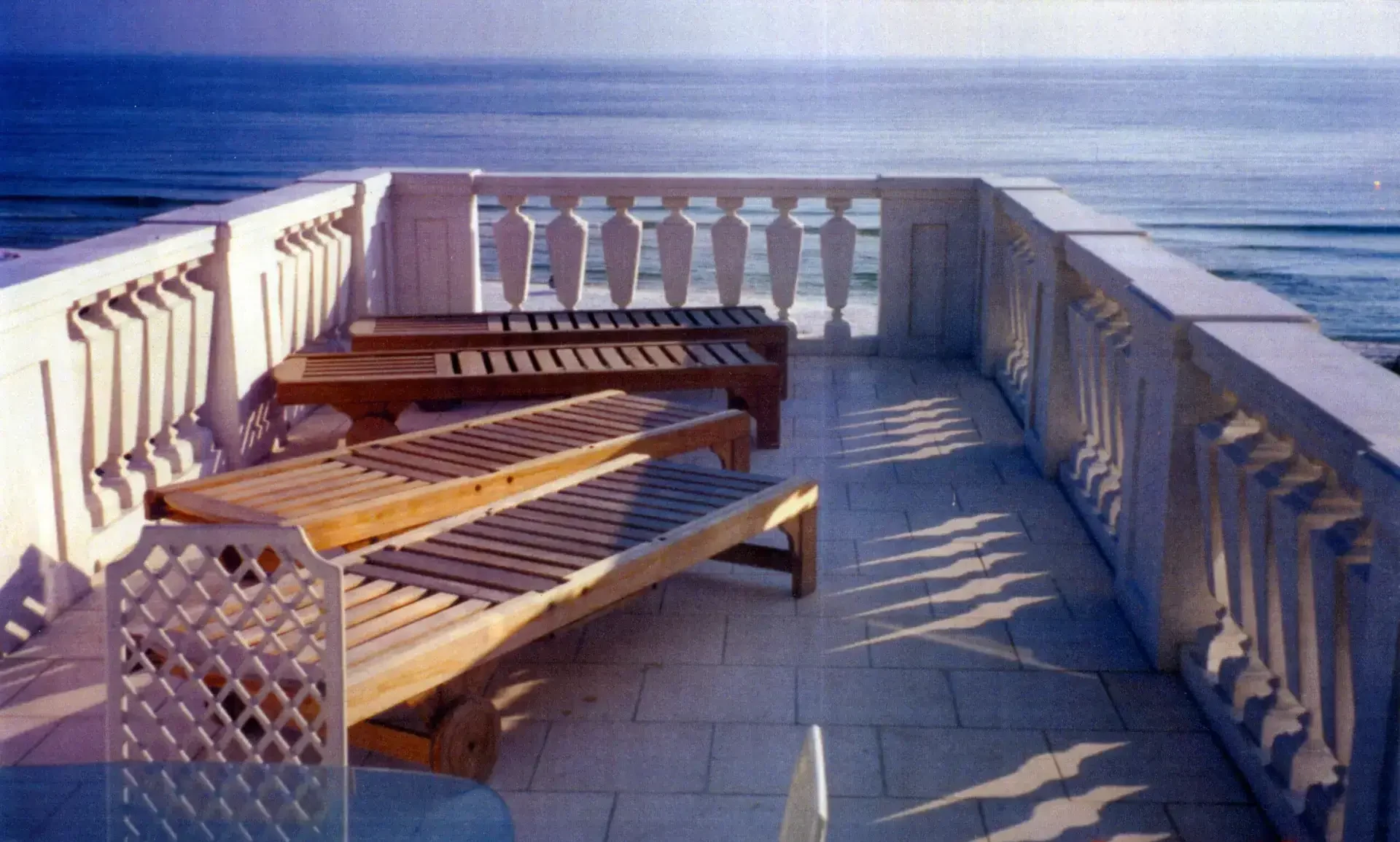
Structure and finishes on gulf beach are custom built with concrete
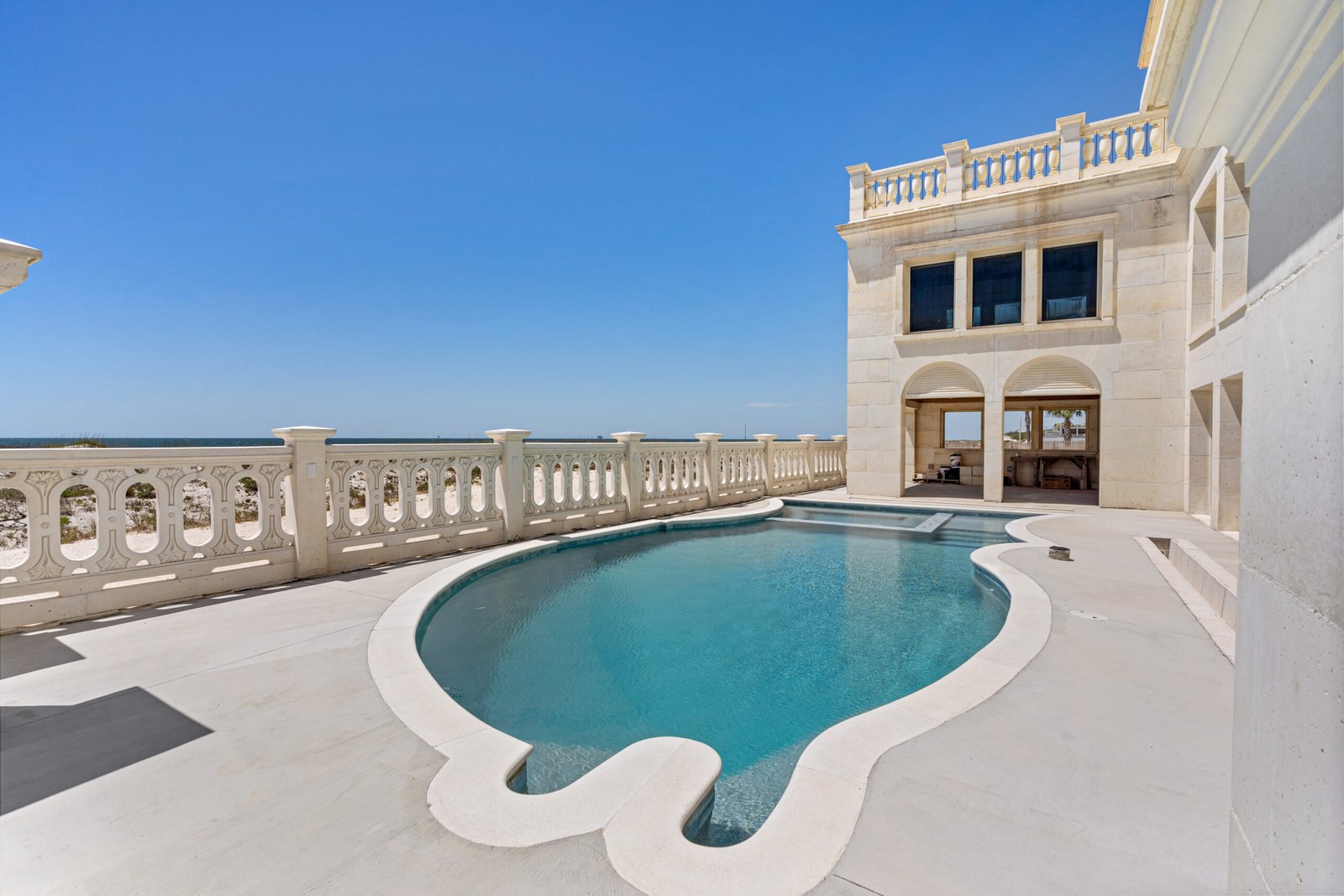
Everything in the photo above is concrete, except the furniture and the water. It’s in Jasmine Dune, SeaGrove Beach FL on the beach on 30A.
Whether you are looking to build in Mobile, Gulf Shores, Orange Beach, or along the Emerald Coast and beyond, choosing a builder who understands the how-to as well as how to obtain the durability and efficiency of concrete construction with concrete finishes and concrete cornices in direct pathway of storms is essential. Concrete homes that include concrete wall and cornice surfaces offer superior protection against hurricanes, lower insurance costs, and, with customizable thicknesses of both XPS and EPS, energy efficiency so high that it can be triple that of ICFs.
Choose a Custom Builder who is Design-Build and a Detail Artisan
In this article, we explore what makes a builder the best choice for your custom concrete home project in Alabama’s and Florida’s coastal areas. And, I’ll introduce a couple of themes to continue in future articles.
Custom concrete home building is great response to the need to use concrete for its obvious advantages. But it’s also the need to adapt it as a finish wall surface material that is attractive. Why, because it is less likely to suffer damages from storms like all the finishes added to other methods. Historically, a finished concrete wall was thought to be unattractive. That is, before DAC-ART came along 30 years ago. ICF and the other methods do not provide a concrete finished surface on the exterior and they don’t provide cornices or sills, lintels, or jambs for doors and windows, any architectural details,as in the form of mouldings, casings, frieses, coins, pilasters with base and capital profiles.
Everything in the photo below is concrete, except the water.
Which Method is more Common? Which Method is the Best?
Which question is the better question?
First, let’s take a look at the current talk about ICF houses. Most of you know about them. Mostly, I see a lot of statements and descriptions that say it’s better. What is it better than? Obviously, it’s better than wood frame houses in energy efficiency of walls and it has more strength in the exterior walls. What else? Well, some soundproofing. A wood frame house is a fairly low bar that would be inferior to any concrete or solid masonry alternative. Would anyone disagree? I’ll cover more in detail the limitations of ICFs in another article and cover the level of customization that is possible with concrete here. But a few definitions of words, labels, and trending terms are worth examining, given the loose usage of them on the web these days as we look at the discussions about concrete methods.
What is a concrete house? How curious to see an ICF house called a “concrete house” when you would never know it when looking at the finished house. Never before have we labeled a house by an unseen interior material. Unable to tame the unruly animal we call concrete, folks have been led into a peculiar way of perceiving this building method. Sort of like le petit prince did when he asked someone to “dessine-moi un mouton”.
I’ll explore the psychological side of this in a future article. Meanwhile, let’s recognize that concrete is in fact a difficult material to control and to make to look good as a finished wall surface, so it’s understandable that the unaware public ducks its head and goes along wagging its tail in response to the foam industry marketing mantra that disrupts our regular use of language as we identify houses. We’ve always made references to houses by what is seen on the exterior: “that big brick house over there” (exterior material), “the small cottage just beyond the cotton gin” (exterior style) “that old stucco house on the hill” (exterior material), “that early Victorian house on the corner across from the methodist church……. Well you can think of hundreds of examples because this is the way we talked before the powerfully wealthy marketing industry that may want to sell a huge amount of extra foam led us ordinary people to identify a house the way le petit prince drew a mouton (sheep).
Building a concrete home on the beach and out in the wider Gulf Coast region requires specialized expertise in the planning phase to handle the combination of logistics, decisions on each material (even the smallest) that can withstand the caustic salt and chlorine conditions between the periodic storms. The tiniest little spring in a light fixture can produce red stains (rust) running down your wall when it’s not #316 stainless steel or above, for example. Dial Construction Inc makes it’s own concrete light fixtures with LED chip boards (on site) and wiring and all stainless screws and other integral hardware parts, as one example of our fight against the elements.
Hurricanes cause a lot of damage. So even if an ICF wall remains standing after a hurricane (and this is an achievement over wood frame), if all the surface material on the outside and potentially on the inside of its concrete wall core is torn and ripped, the home owner will have very, very high costs to repair the damage. Note that the concrete wall core in ICF doesn’t protect the cornice or the finishes, which have skyrocketed in costs to replace or repair.
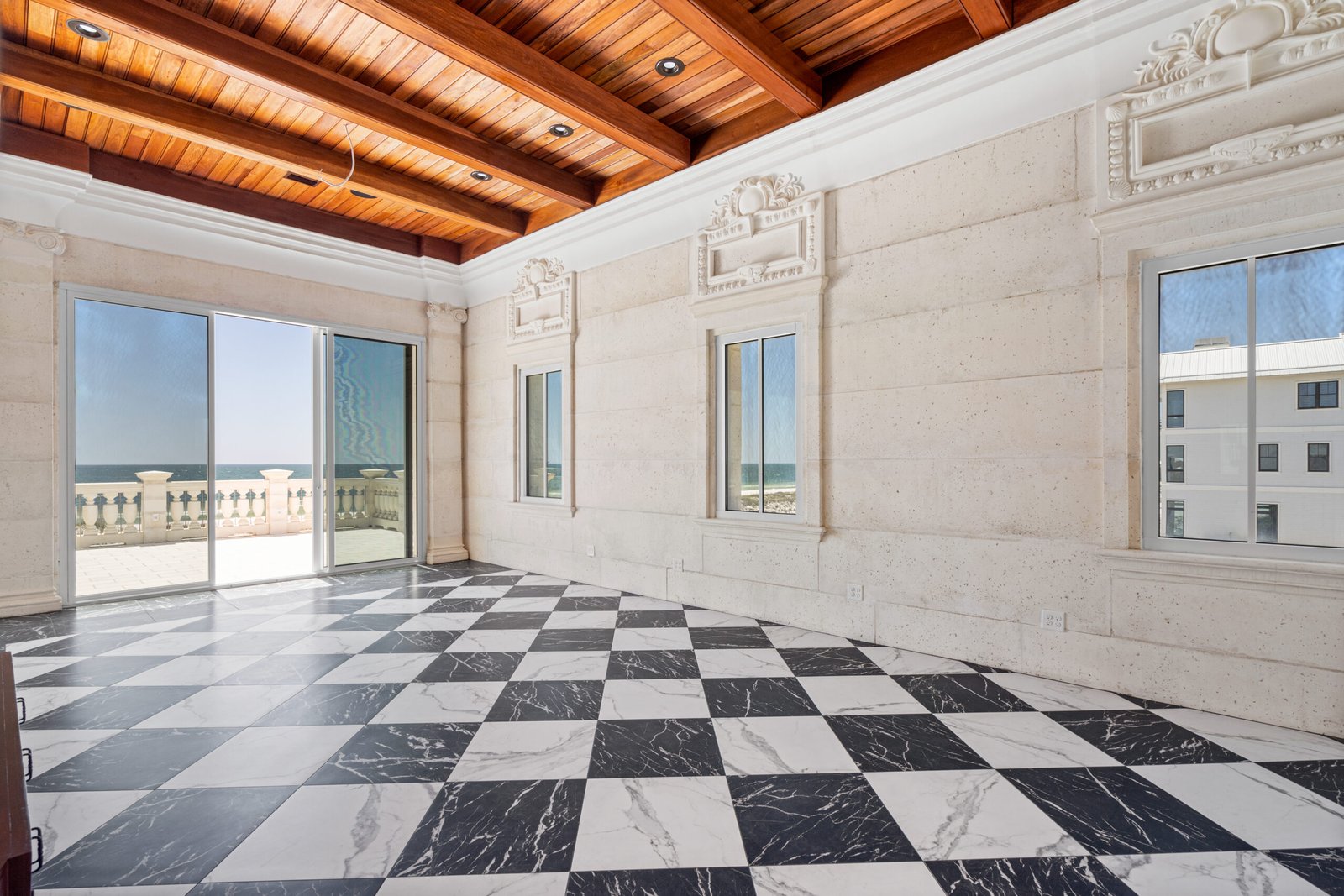
See in the photo below how wonderful the stone-like concrete finished walls can be on the interior as well as on the exterior of a real concrete home. This interior concrete is much more than authentic beauty, it’s a treasure in thermal-mass-benefit. It’s on the interior side of the foam insulation. ICFs have a thermal mass in the concrete core, which is sadly, on the wrong side of the insulation to allow any strong thermal mass benefit. The results of having this interior thermal mass on the interior side of the insulation demonstrates in utility bills how inferior ICFs actually are compared to this.